Trying to choose between an older in-town neighborhood and a newer community in Canton? You are not alone. Many buyers love the character of established areas but also want the convenience that often comes with newer construction. This guide will help you compare the tradeoffs so you can focus on the type of neighborhood that fits your daily life, budget, and long-term plans. Let’s dive in.
How Canton’s neighborhoods differ
Canton’s planning framework broadly separates the city into historic or traditional stable neighborhoods and suburban developing areas. That big-picture split helps explain why home shopping in Canton can feel like comparing two very different lifestyles, even within the same city.
Historic Canton is described by the city as a stable area with established housing stock and a strong neighborhood identity shaped by architecture, lot patterns, and street design. Newer edge areas include places such as Hickory Log, Great Sky, Laurel Canyon, Canton West, Knox Bridge, Prominence, Prominence Point Ridge, Mountain Vista Overlook, Governor’s Walk, Etowah Shoals, and the Pea Ridge County Pocket.
Canton’s rapid growth adds another layer to the decision. The city’s housing update says the population has more than quadrupled since 2000, and by March 2022, Canton had approved 11 new housing developments totaling 2,832 units. That pipeline leaned toward medium- and high-density housing, which helps explain why some newer neighborhoods feel more planned, compact, and amenity-focused than older in-town areas.
Why established neighborhoods appeal
If you are drawn to history, mature streetscapes, and a stronger connection to downtown, established neighborhoods may stand out right away. In-town Canton includes a diverse residential mix and several significant architectural styles, according to the city’s residential design guidance.
The oldest homes are concentrated near East Marietta, East Main, Archer, and Jarvis Streets. The Cotton Mill Village homes date to around 1900 and are found along streets such as Riverdale Circle, Middle Street, Hill Street Circle, Hill Street, Academy Street, and Railroad Street.
One of the biggest advantages of established neighborhoods is their sense of place. These areas are closely tied to the city’s historic identity and are generally near the Central City area and employment centers. Downtown Canton also remains the symbolic core of the community, with the city reporting more than 300,000 square feet of historic buildings restored in the last two years.
What “charm” often means in Canton
In practical terms, established charm usually means features that are hard to recreate in new construction. You may see mature trees, older street grids, distinct lot layouts, porches, and architecture that reflects different periods of Canton’s development.
For many buyers, that setting creates a stronger emotional connection. If you want to be closer to downtown character and enjoy a neighborhood that feels rooted in local history, older areas may offer that experience more clearly than newer edge-of-city communities.
What to check before buying older
Character often comes with more homework. Canton’s planning documents say infill should blend with surrounding scale and design, and historic structures should be protected and maintained.
That matters even more now because Canton approved a Historic District expansion in November 2024. The city says properties inside the district require Historic Preservation Commission review for exterior work beginning January 1, 2025.
If you are considering an older home, make sure you confirm whether it sits inside the historic district or a proposed preservation area. Exterior projects that seem simple at first glance may require additional review, which can affect your renovation timeline and planning.
Why new-build communities attract buyers
Newer construction communities often appeal to buyers who want a more predictable layout, newer systems, and shared neighborhood features. In Canton, these suburban developing areas are generally concentrated at the edges of the city.
The city describes these areas as relatively low-density residential developments without transit connections, although they can include both smaller-lot and larger-lot sections. Planning guidance also recommends features such as interconnected streets, pedestrian infrastructure, greenspace, and master plans that address architecture and landscape design.
For many buyers, the biggest draw is convenience. A newer home may reduce the number of immediate repairs or updates you need to budget for, and a planned community may include common areas or amenities that support your day-to-day routine.
What amenities and HOA structure can mean
Canton’s private-development guidance notes that these communities are often designed to maximize land use while offering shared amenities, security, and lifestyle conveniences. Common areas are frequently managed by homeowners associations.
That means you are not just buying a home. You are also evaluating dues, neighborhood rules, amenity access, and how responsibilities are divided between you and the HOA.
This can be a plus if you prefer a more structured environment and fewer exterior upkeep decisions. It can be a drawback if you want more flexibility over how your property looks or how much you spend on shared services.
How topography affects newer areas
Not every new-build experience is the same in Canton. The city’s SR 140 study notes that some areas have steep topography, which can make building more challenging and affect scenic views.
The same study says some corridor areas include limited sidewalks, mixed residential and commercial uses, and large residential developments near the northern end. So even in a newer neighborhood, it is worth looking beyond the house itself to understand grading, walkability, road layout, and how the area feels once you are there in person.
Commute and connectivity matter
No matter which style of neighborhood you prefer, your day-to-day travel should be part of the decision. Canton’s transportation planning focuses on improving safe access and connectivity to neighborhoods, recreation facilities, local businesses, and natural resources.
At the same time, the city’s SR 140 study says I-575 connects Canton to the broader Atlanta region but can be congested during peak times. Downtown access is also shaped by traffic flowing through I-575 exits 16 and 20 and along the SR 140 or Marietta Street corridor.
That is why commute testing matters so much. A neighborhood that looks ideal on paper can feel very different if your drive time changes sharply during the hours you actually need to leave home.
A smart way to test location
Before you commit, drive the route at your real departure time. Do the same for common errands, downtown visits, and weekend destinations that matter to you.
You should also compare:
- Street connectivity
- Sidewalk availability
- Traffic patterns near major corridors
- Access in and out of the neighborhood
- How grading or road design affects everyday driving
Maintenance tradeoffs: old versus new
One of the clearest differences between established homes and newer communities is how maintenance tends to show up in your ownership experience. Older homes often involve more owner-specific upkeep and renovation planning.
Newer communities, by contrast, may shift some maintenance into HOA-managed systems or shared common areas. The city’s guidance does not frame that as a strict rule, but it is a useful way to think about the difference.
If you enjoy personalizing a home and do not mind planning projects over time, an established property may be a great fit. If you want fewer unknowns in the near term and prefer more standardized systems, a newer home may feel easier to manage.
A simple Canton buyer checklist
When you compare established charm versus new builds in Canton, keep your review focused on the details that affect daily life. A simple checklist can make the decision much clearer.
Use this as a starting point:
- Confirm whether the property is inside the historic district or a proposed preservation area
- Compare lot size, tree cover, grading, and yard usability
- Review street layout and sidewalk connectivity
- Check HOA dues, CC&Rs, and amenity responsibilities
- Test your commute at the time you actually plan to travel
- Look at how close you want to be to downtown Canton versus edge-of-city access
- Consider whether you want character and flexibility, or convenience and predictability
Which Canton neighborhood style fits you?
There is no one right answer in Canton. The better choice depends on which tradeoffs align with your goals.
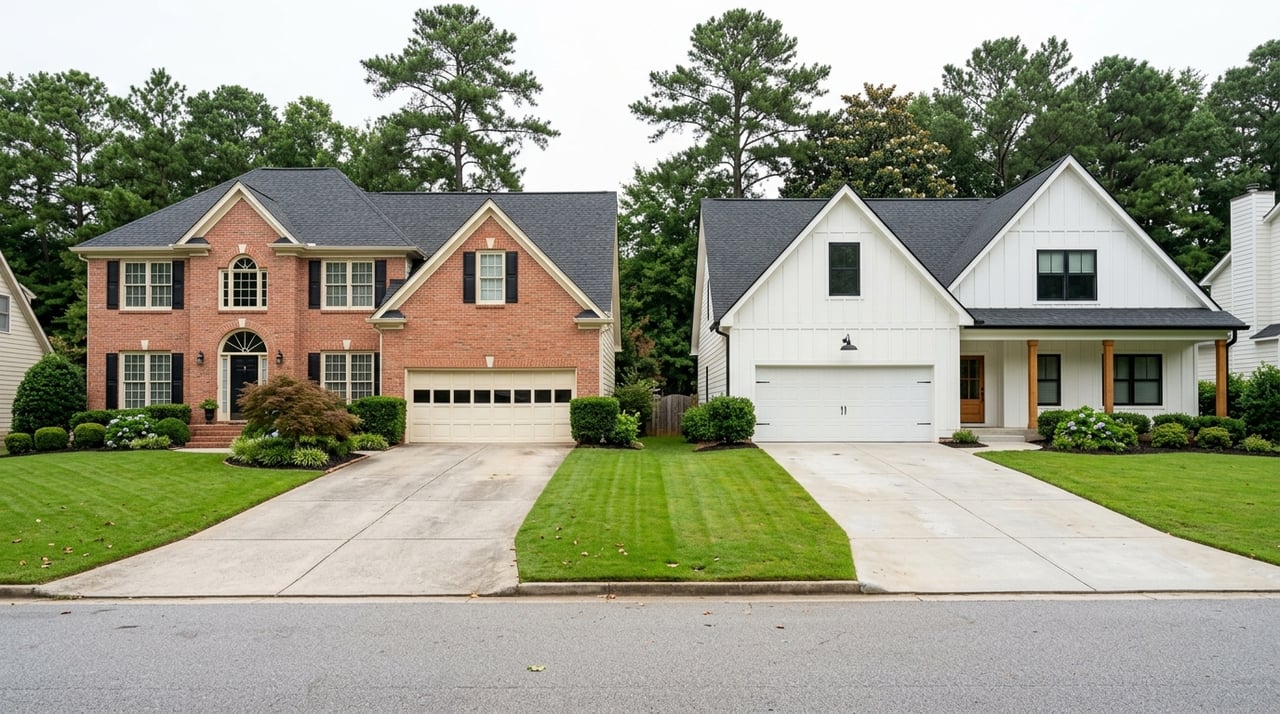
If you value architectural variety, established street patterns, and a closer connection to downtown Canton, an older neighborhood may feel like home. If you want planned amenities, more standardized design, and a community built around newer development patterns, a new-build neighborhood may be the better match.
The key is to compare more than finishes and square footage. When you look at preservation rules, commute realities, maintenance expectations, and neighborhood layout together, you can make a much more confident decision.
If you are comparing neighborhoods in Canton and want hands-on guidance tailored to your goals, One Nest Georgia is here to help you weigh the tradeoffs and move forward with clarity.
FAQs
What is the difference between historic and newer neighborhoods in Canton?
- Historic Canton is described by the city as a stable area with established housing stock and neighborhood identity, while newer areas are generally suburban developing communities concentrated around the city’s edges.
Do historic homes in Canton have extra rules for exterior changes?
- Yes. Canton says properties inside the expanded Historic District require Historic Preservation Commission review for exterior work beginning January 1, 2025.
Are new-build neighborhoods in Canton more likely to have HOAs?
- Often, yes. The city’s private-development guidance says common areas in newer communities are frequently managed by homeowners associations, so you should review dues, rules, and amenity responsibilities carefully.
Is commuting an important factor when choosing a Canton neighborhood?
- Yes. Canton’s SR 140 study says I-575 provides regional access but can be congested at peak times, so it is smart to test the commute at the time you actually expect to travel.
Are older homes in Canton usually closer to downtown?
- In many cases, yes. Established in-town areas are more closely tied to downtown Canton and the Central City area, while many newer developments are located at the city’s edges.
What should you compare when choosing between an older home and a new build in Canton?
- Focus on historic district status, lot size, tree cover, grading, sidewalk and street connectivity, HOA structure, amenity package, commute patterns, and the level of maintenance you want to take on.