Whether you're getting your first home loan or re-entering the housing market after a long time, choosing a mortgage product can be tricky. Many factors come into play beyond your financial situation, such as current interest rates, how long you plan to live in the house, and more.
One key decision is understanding the differences between a fixed-rate mortgage (FRM) and an adjustable-rate mortgage (ARM). Here’s a breakdown of each to help you weigh the pros and cons before making your decision.
Fixed-Rate Mortgage
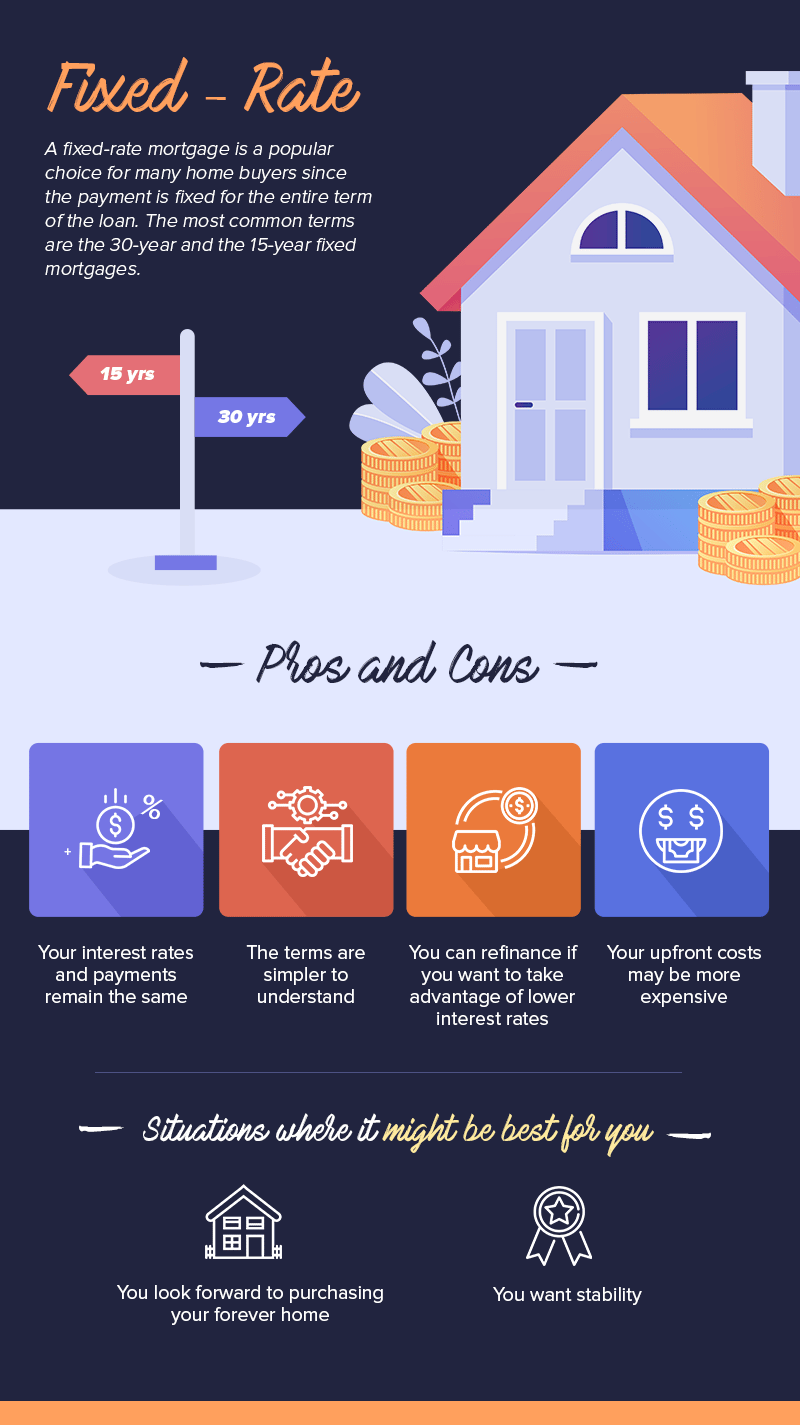
A fixed-rate mortgage is popular because the monthly payment remains the same for the entire loan term. The most common options are 30-year and 15-year fixed mortgages.
-
30-year fixed: Monthly payments are lower due to the longer amortization period. Ideal for borrowers who want to free up funds for other goals or build emergency savings.
-
15-year fixed: Payments are higher because the loan is paid off in half the time. Best for those with enough budget room who want to reduce interest over time.
Pros and Cons
- Stable interest rates and payments - Rates and mortgage payments remain the same throughout the loan term, protecting you from market fluctuations.
- Simpler terms - Easy to understand, especially for first-time buyers. Fixed-rate mortgages are virtually identical across lenders.
- Opportunity to refinance - If rates drop, you can refinance to take advantage of lower rates.
- Higher upfront costs - Closing costs and monthly payments are typically higher than ARMs, and borrowers with poor credit may face challenges.
Best Situations for a Fixed-Rate Mortgage
-
Buying your “forever home” - Ideal for buyers planning to stay long-term. Helps plan your budget and reduce risk of paying more in interest.
-
Seeking stability - Predictable payments make budgeting easier and reduce financial uncertainty.
Adjustable-Rate Mortgage (ARM)
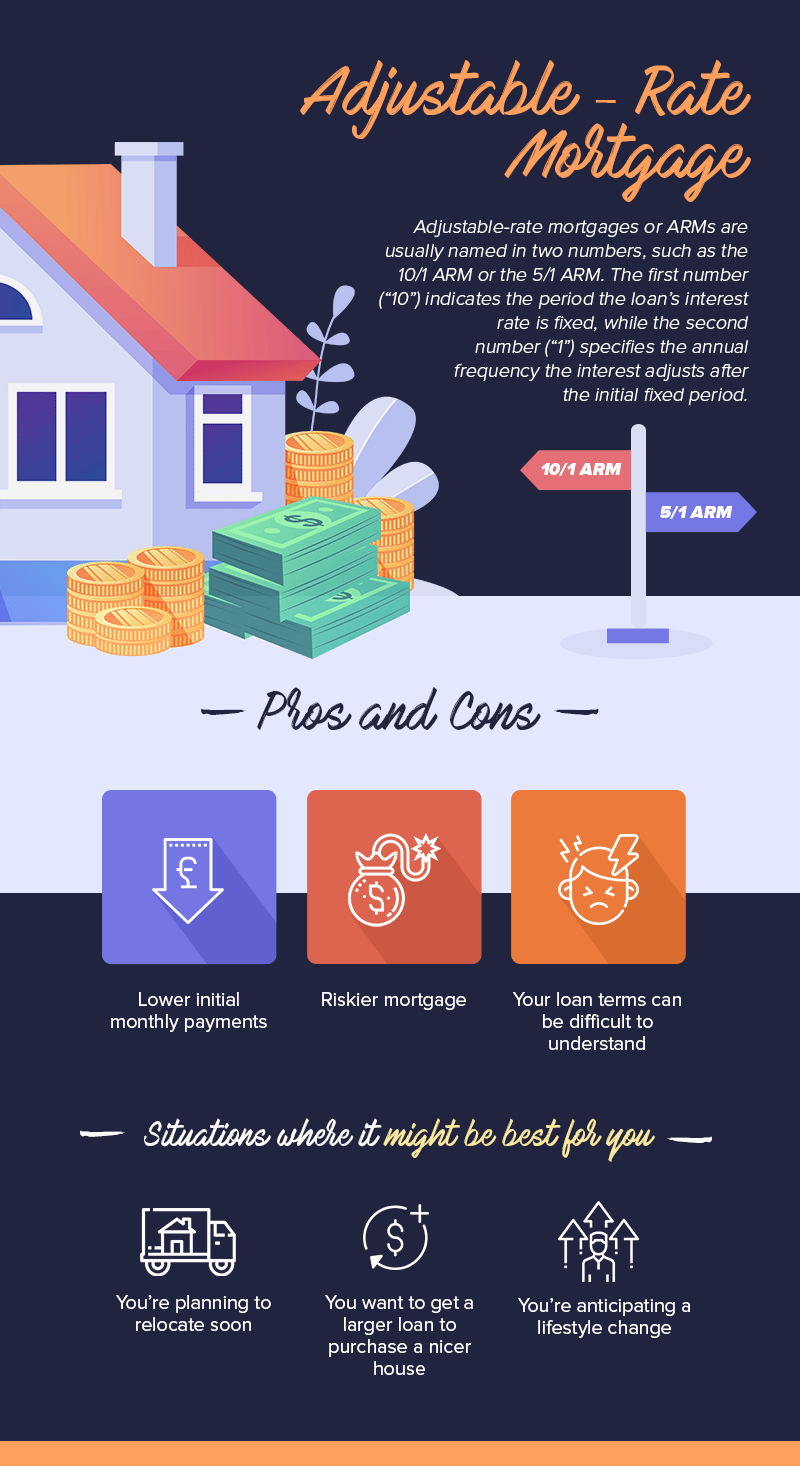
ARMs are named with two numbers, such as 10/1 ARM or 5/1 ARM:
-
First number = initial fixed-rate period (e.g., 10 years)
-
Second number = frequency of rate adjustments afterward (e.g., 1 year)
After the initial period, the rate adjusts annually based on benchmarks like LIBOR or one-year Treasury yields. ARMs also have caps limiting how high or low the rate can go.
Pros and Cons
- Lower initial payments - Initial payments are lower than a fixed-rate mortgage, which can free up funds for home purchases or other investments.
- Higher risk - Rates can rise after the initial period, making payments unpredictable. Borrowers must evaluate their risk tolerance and budget flexibility.
- More complex terms - ARMs include factors like margins, adjustment indexes, and caps, which can be confusing for first-time buyers.
Best Situations for an ARM
-
Planning to relocate soon - Ideal for buyers purchasing a starter home or anticipating a move in 5–7 years.
-
Wanting a larger loan for a nicer home - Lower initial rates allow buyers to qualify for a bigger mortgage than they could afford with a fixed-rate loan.
-
Expecting a lifestyle or income change - If your income is likely to rise, an ARM allows lower payments now while preparing for potential increases later.
Fixed-Rate vs ARM: Which Should You Choose?
ARMs offer flexibility and lower initial payments, making them appealing to younger or first-time buyers. However, ensure your budget can handle higher payments if rates rise.
A fixed-rate mortgage remains the safer option for those seeking stability and predictable payments. In both cases, carefully assess your financial situation, long-term plans, and comfort with risk to make the best decision.