Looking for space to ride, keep horses, and still be close to Atlanta? If you want acreage, privacy, and a true horse-friendly community, Milton in North Fulton checks a lot of boxes. You’ll find a city that actively protects its rural character, supports equestrian uses, and offers properties built for barns, arenas, and pasture. In this guide, you’ll learn what makes Milton different, the zoning rules that matter, what to look for on acreage, and how to buy with confidence. Let’s dive in.
What makes Milton stand out
Milton has a rural-in-feel landscape with rolling pastures, mature tree lines, and estate-scale lots. The city invests in greenspace and trail connectivity, including Milton City Park & Preserve’s multi-mile trails, which residents and local equestrians enjoy. You also get access to major corridors like SR 372 and GA 400, so you can keep daily life workable while living in horse country. The result is a rare balance: country space with suburban convenience.
AG-1 zoning: your foundation for horses
If you plan to keep horses at home, AG-1 (Agricultural) zoning is the key. AG-1 is the primary district that enables equestrian uses and larger lots. Historically, the code has required a minimum lot area of one acre for lots with paved frontage, and three acres for lots on unpaved roads, along with defined setbacks. The city also increased the minimum lot width at the building line for newly platted AG-1 lots from 100 feet to 150 feet to help retain a rural look. You can review the city’s summary of this change in the City’s update to AG-1 lot width requirements, and background zoning documents in Milton’s Unified Development Code and 2040 planning work.
Why this matters: AG-1 gives you room for barns and pasture, and it supports the city’s long-term goal to keep Milton’s rural character intact. When you start a property search, confirm a parcel’s zoning and whether the lot was created before or after the width change.
Policies that protect rural character
Milton backs up its rural vision with real policy. The updated Unified Development Code and the 2040 Comprehensive Plan guide growth in a way that favors larger lots and preserves greenspace. The city also offers Milton’s large-lot incentives for properties around three acres or more. These can make it easier to preserve acreage and to rebuild certain equestrian structures with fewer administrative steps. For buyers and current owners, these tools show that the city is committed to keeping a horse-friendly landscape for the long term.
Keeping horses: local rules to know
Before you buy, review the local rules about animals and structures. Milton’s animal control FAQ notes maximum counts for certain animals on non-AG-1 parcels. For example, horses and similar livestock have a stated cap on non-AG-1 properties. Different standards and expectations apply to AG-1, so it is important to confirm the parcel’s zoning.
If your plans include a non-standard barn height, an arena with lighting, or unique setbacks, you may need approvals. Variances and appeals run through the city’s Board of Zoning Appeals. Your agent can help you coordinate with staff early, so you understand what is allowed and what needs a formal review.
What you’ll find on Milton equestrian properties
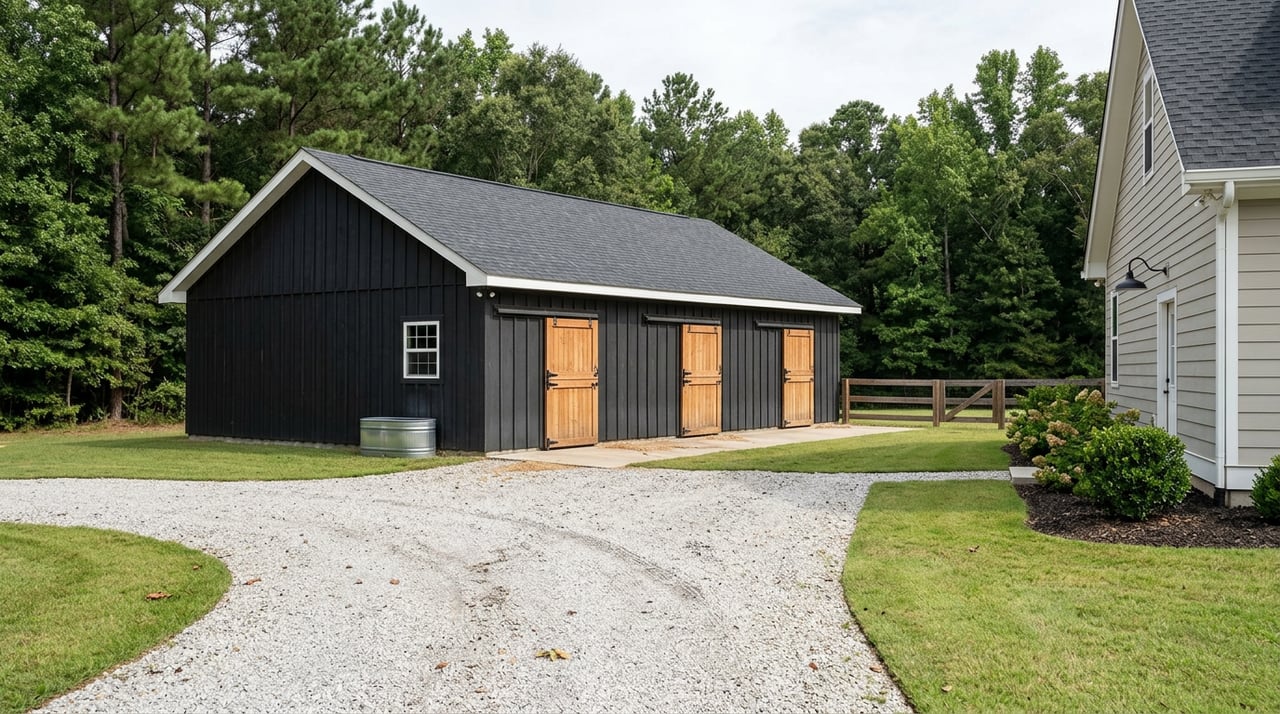
Many Milton acreage and estate listings include practical, horse-ready features. You will often see timber or block barns with multiple 12x12 stalls, tack and feed rooms, hay storage, and wide center aisles. Fencing commonly includes four-board or hot-wired systems with cross-fenced paddocks and turnout lanes. Outdoor riding arenas may use sand or mixed footing, and some properties include grass dressage areas or jump fields. On larger tracts, you may also find caretakers’ spaces near the barn to support daily care.
These are the details that make life easier when you keep horses at home. As you tour homes, look for quality fencing, safe gates, thoughtful drainage around the barn, and enough pasture rotation to protect grass health.
Land and infrastructure checks that matter
Acreage often looks great from the driveway, but the details make or break daily use. Build these checks into your due diligence:
- Septic and water. Confirm the septic permit, tank and drain field location, and whether the property has public water or a private well. Start with the city’s FAQs and Fulton County Health for records. The city’s general services FAQ points you to the right offices.
- Useful acreage versus total acreage. MLS acreage can include steep slopes, riparian buffers, or flood-prone sections. Review topography, drainage patterns, and any stream setbacks. Milton’s Greenprint and environmental resources highlight protected corridors that are common in the area.
- Fencing, footings, and barns. Inspect fence posts, wire condition, stall ventilation, roof age, and whether the barn has water and electric. Ask how the arena drains after heavy rain and what footing mix is in use.
- Access and vehicles. Check turning radius for trailers, trailer parking, and whether the driveway surface works year-round.
Costs: boarding versus keeping horses at home
Your monthly and annual costs will depend on how many horses you keep, the level of care, and whether you board or handle care at home. National sources show routine ownership costs vary widely by region and service level. For a helpful overview, review this national overview of horse ownership costs. In Milton, many owners choose at-home care on AG-1 parcels and supplement with local trainers or occasional boarding. Compare estimates from local barns, vets, and feed suppliers with your at-home plan so you set a realistic budget.
How Milton compares with nearby suburbs
Compared with many North Fulton suburbs, Milton skews toward larger lots, more estate-scale properties, and a visible equestrian presence. Regional market snapshots show Milton’s median home price sits well above neighboring Alpharetta, Roswell, and Johns Creek. That premium reflects the supply of acreage, barns, and custom estates, along with city policies that protect low-density character. If you want space for horses and a quiet setting, Milton offers a clearer path than typical smaller-lot suburbs.
Commuting is still in reach. Milton connects to SR 372, SR 140, and GA 400 corridors, so you can reach major employment centers with reasonable planning. Think in terms of traffic windows and destination-based drive times rather than a single number, and map your routine during rush periods.
Buyer checklist for Milton acreage and horse properties
Use this list to focus your search and due diligence:
- Zoning status. Is the parcel AG-1 or another district? Confirm on the Community Development zoning page. Ask whether the lot was created before or after the 150-foot AG-1 width change.
- HOA covenants. Do any CC&Rs limit livestock, fencing, or accessory structures? Get the recorded covenants and review them with your agent and counsel. HOA rules are separate from city zoning.
- Septic and water. Locate the tank and drain field. Confirm well vs. public water and request records. The city’s general services FAQ is a good starting point for where to request septic permits.
- Site usability. How many acres are truly usable pasture versus steep or buffered? Check for stream buffers, floodplain, and conservation easements. Use county GIS and the city’s Greenprint for context.
- Barn and fencing condition. Measure stall sizes, inspect ventilation, and confirm water/electric in the barn. Walk the fence lines and gates. Ask about arena drainage and footing type.
- Animal limits. If the parcel is not AG-1, review the city’s animal control FAQ for maximum counts and manure management guidance. For multiple equids, AG-1 is usually the right fit.
- Permits and approvals. New barns, arenas, or major upgrades may need permits or variances. Start with Community Development and, if needed, the Board of Zoning Appeals.
- Local services. Identify nearby vets, farriers, trainers, and boarding options. Milton maintains equestrian resources through its community programs and commissions.
How One Nest Georgia helps you buy with confidence
Buying acreage is about more than bedrooms and baths. You need clarity on zoning, site usability, and the quality of the equestrian infrastructure. Our North Georgia experience includes suburban estates and lifestyle acreage, so we help you focus on what matters: confirming AG-1 status, reviewing septic and well details, reading surveys and easements, and coordinating with the city on permits when needed. You get hands-on guidance, clear communication, and access to real-time listing updates.
When you are ready to explore Milton’s equestrian properties, we are here to help you compare tradeoffs, protect your due diligence, and move with confidence.
Ready to find your place in Milton horse country? Reach out to One Nest Georgia for a conversation about your goals and a tailored plan for your search.
FAQs
What makes Milton ideal for horse owners compared to nearby suburbs?
- Milton preserves large-lot AG-1 zoning, invests in greenspace and trails, and supports equestrian uses, which is less common in smaller-lot suburbs.
How do I confirm if a Milton property is AG-1 and horse-friendly?
- Check the parcel on the city’s Community Development zoning page and ask for a zoning certification letter during due diligence.
What are the basic rules for keeping horses in Milton?
- Standards differ by zoning; the city’s animal control FAQ notes animal counts for non-AG-1 parcels, while AG-1 supports equestrian uses with different expectations.
Do I need permits to add a barn or arena on an AG-1 lot?
- Many improvements require permits, and some designs may need variances reviewed by the Board of Zoning Appeals. Coordinate with Community Development early.
Are there public trails for riding in Milton?
- Yes. Residents enjoy access to Milton City Park & Preserve’s multi-mile trails, with planned connections that support a rideable landscape.
What due diligence should I do on acreage before closing?
- Verify septic and water, confirm usable acreage versus buffers or slopes, inspect barns and fencing, and review zoning and HOA covenants. Use the city’s Greenprint for environmental context.